Twenty-five years on, Guantanamo still holds 15 men and Washington has no plan to close it
The US prison at Guantanamo Bay, opened in January 2002, still holds 15 men a quarter-century later. Its first commander calls it a geriatric prison, and there is no push in Washington to shut it.
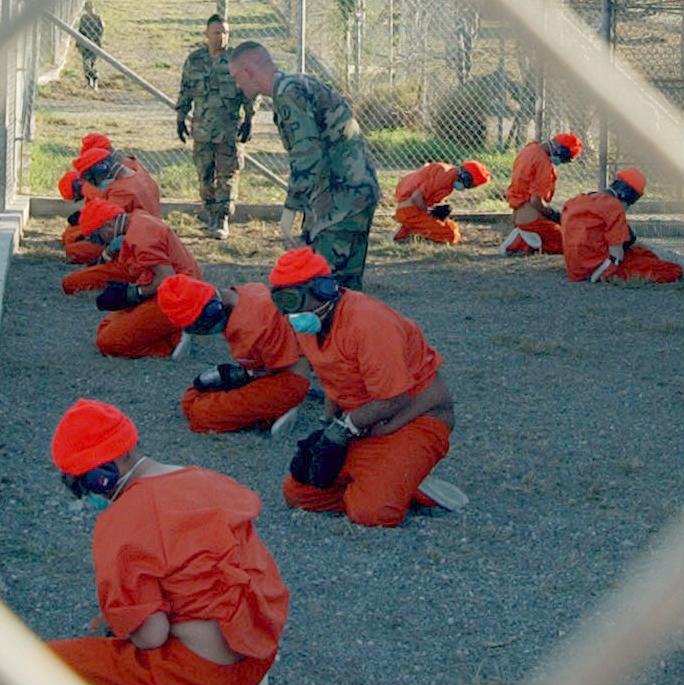
Why is Guantanamo prison still open? Twenty-five years after the first detainees arrived at the US naval base in Cuba on January 11, 2002, the detention camp built for a short emergency has become a permanent institution with no closing date.
Around 780 men and boys have been held at Guantanamo over its lifetime. Fifteen remain. All fifteen have been detained since at least 2008, and three arrived in 2002, the year the camp opened. Roughly 800 US military and civilian personnel are assigned to the detention mission, more than 50 staff for every prisoner.
I thought we were looking at 10 years, retired Marine Major General Michael Lehnert, the facility's first commander, has said. I didn't think we were looking at 25 years, and you and I both know there's no push right now to close it either. We're running a geriatric prison at this point. A very expensive one, by the way. Lehnert has long argued that the prison does not make the United States safer.
The fifteen are not a single group. Seven face charges in the military commission system, including five accused of planning the September 11 attacks. Two have been convicted. Three have been cleared for transfer by US review boards but remain in their cells because no country has agreed to take them. Three more are held in indefinite detention without charge and without clearance for release, among them Abu Zubaydah, who has never been charged with a crime despite nearly two decades in custody.
The camp has also acquired a second life. In the past year the base has been used as a transit point for migrants and federal prisoners, cycling hundreds of people through a facility originally justified as a place to hold the worst of the worst. The legal grey zone that made Guantanamo useful in 2002, US control without Cuban sovereignty and, Washington argued, without the full reach of the US constitution, is the same grey zone that makes it useful now.
A quarter-century on, the question the camp's own first commander asks is the one Washington will not answer: if not ten years, and not twenty-five, then how long?
Sources
Share this story
Related articles

Container ship sinks near Strait of Hormuz as Iran and maritime sources dispute the cause
The Singapore-flagged container ship GFS PRIDE sank near the Strait of Hormuz on October 14, 2026, with all 21 crew evacuated safely. Maritime sources say it was hit by a projectile; Iran's Revolutionary Guard claims it struck a naval mine on an unauthorised route. It is the second vessel sunk since the US-Iran war began in February, as attacks on shipping in the strait intensify.
· 2 min read

Houthi missile barrage targets Saudi Arabia as Riyadh issues danger warning and halts flights
Yemen's Houthis fired a barrage of ballistic missiles at Saudi Arabia on October 13, 2026, with Riyadh claiming interceptions over Dammam, Dhahran and Haradh. Shrapnel fell near Aramco's headquarters, a danger warning went out for the capital, flights were halted, and the Houthis also claimed strikes on Haifa as the Saudi-led coalition hit back inside Yemen.
· 2 min read

Turkey masses troops and tanks on Syrian border as displaced villagers remain locked out of their homes
Ankara has sent busloads of soldiers, tanks and a 50-vehicle armoured convoy to frontier districts facing northern Syria amid preparations for a new incursion, even as 124 documented Turkish military sites inside Syria keep displaced villagers from returning to their homes.
· 2 min read

Trump declares an energy ceasefire that exists only in his telling, as Russian strikes continue
Trump insists Russia and Ukraine agreed to stop hitting energy sites because he told them to. Kyiv says Moscow struck six facilities anyway; Lavrov rejects any pause.
· 2 min read