Opinion
Opinion: The city is clean because someone is paid too little to clean it
Madurai's conservancy strike is not a dispute about one contractor. It is about a city that outsourced its dirtiest work and then refused to sign its own assurance. Dignity begins with staffing and pay.

A city that will not look at its own garbage has already told you what it thinks of the people who carry it away. In Madurai this week, that sentence stopped being a metaphor. Garbage stood uncleared across 100 wards because roughly 3,900 conservancy workers were asked to do the work of 8,000, and because the government that outsourced their labour would not even promise in writing not to renew the contract that governs their lives.
Outsourcing is presented as efficiency, a word that launders distance. The Corporation no longer employs the worker. An agency does. The agency answers to a tender. The tender answers to a file. When the worker asks who is responsible for the shortfall, every desk in the chain can point at another desk. What Madurai's unions punctured on Monday was not a contract clause but that alibi. They named the government as the author of the system and demanded that it act like one: terminate the agency, staff the city to its own stated norm, and put the assurance where assurances belong, on paper.
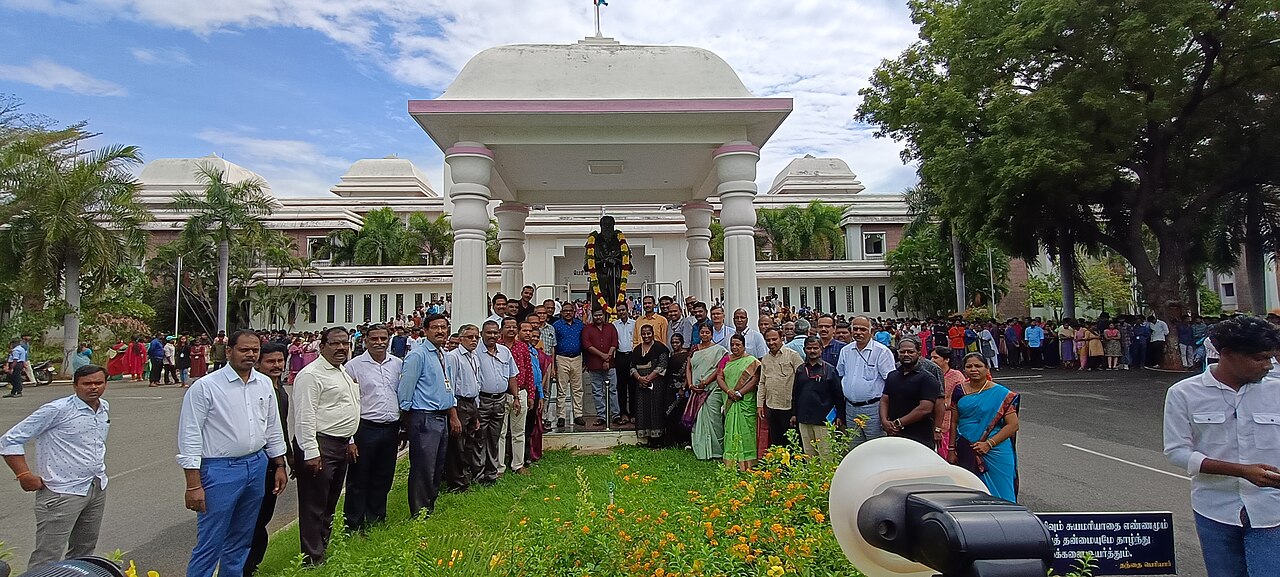
Periyar taught Tamil Nadu to judge a society by how it treats those assigned its dirtiest work, because caste taught the opposite lesson for centuries, that some hands were born to clean so that other hands could stay pure. Outsourcing has not repealed that old arrangement. It has only given it an invoice and a human resources department. The worker is still contract, still temporary, still told that permanence is a gift rather than a debt the city owes for years of dawns spent inside other people's waste.
The pattern is larger than Madurai. In Virudhunagar, Amma Unavagam workers who have served for twelve and thirteen years asked why the Collector's wage order of 578 rupees a day remained unpaid six months after it took effect. In Chennai, nurses who keep the state's health and wellness centres running asked for 45,000 rupees and permanency and were answered first with detention and only later with dialogue. Different uniforms, one grammar: promise publicly, outsource quietly, assure verbally, and call the worker unreasonable for insisting that a promise become an order.
The remedy is not sentiment. It is establishment strength. Fill the posts to the 8,000 norm the unions cite. End the fiction that essential, permanent work can be staffed by perpetual contract. Pay the notified wage. And when a government tells workers a contract will not be renewed, sign it. A city clean at the price of invisible labour is not clean. It is merely tidied, at someone else's dignity.
Sources
Share this story
Related articles
Opinion: Care is work, and work deserves permanence
Chennai's contract nurses were not asking for a favour. They were asking the state to recognise care as skilled work, with pay, security and a future.
· 2 min read

Invited to talk, taken away by police: Chennai nurses say the TVK government betrayed them
Contract nurses on hunger strike in Chennai say five leaders were detained after being called to the Secretariat for talks. Their protest is paused until November 3, but the questions on pay and permanence remain.
· 2 min read
Opinion: Who eats, who waits, and who is only heard after the cameras arrive
A tonne of ration rice seized in Ranipet and an 87-year-old carried out of her Madrid home tell the same story: systems that count stock and title first, and people only when forced. Periyar's question still stands: who eats, who waits, and who is heard too late?
· 2 min read
Opinion: An airworthiness certificate must never look like it is for sale
A Chennai bribery arrest inside aviation's safety regulator is not only a crime story. It is a test of whether public systems protect ordinary people who cannot inspect the machine they are asked to trust.
· 2 min read